
Types of Orthopedic Implants: Plates, Screws, Nails, and Fixation Systems Explained
Orthopedic implants play a vital role in modern medicine, helping surgeons restore mobility, stabilize fractures, and improve patient outcomes. From trauma surgery to joint reconstruction, different types of implants are used depending on the clinical condition and anatomical requirements.
In this guide, we explore the main types of orthopedic implants, their functions, and how they are used in advanced orthopedic procedures.
What Are Orthopedic Implants?
Orthopedic implants are medical devices designed to replace, support, or enhance damaged bones and joints. They are typically made from biocompatible materials such as stainless steel, titanium, or PEEK.
Main Types of Orthopedic Implants
1. Plates and Screws
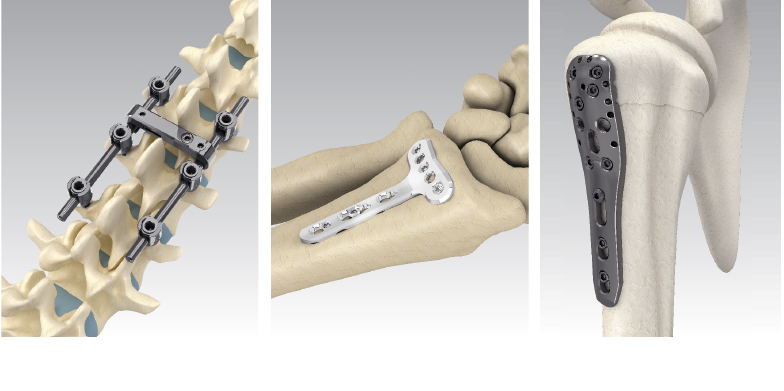
Plates and screws are among the most commonly used implants for fracture fixation. Plates are attached to the surface of bones using screws to maintain alignment during healing.
2. Intramedullary Nails
Intramedullary nails are inserted into the marrow canal of long bones and are commonly used for fractures of the femur and tibia.
Explore: Interlocking Nail System
3. External Fixation Systems
External fixators stabilize fractures from outside the body, making them ideal for complex injuries and emergency situations.
Learn more: External Fixator System
4. Joint Prostheses
Joint replacement implants are used to replace damaged joints such as the hip or knee.
Example: Hip Prosthesis System
5. Spine Fixation Systems
Spinal implants provide stability and support in cases of spinal disorders, fractures, or deformities.
How Surgeons Choose the Right Implant
The selection of an implant depends on several factors:
- Type and location of fracture
- Patient age and bone quality
- Severity of injury
- Presence of infection
Benefits of Modern Orthopedic Implants
- Improved stability and faster healing
- Minimally invasive surgical options
- Enhanced patient mobility
- Long-term durability
Conclusion
Understanding the different types of orthopedic implants helps both medical professionals and patients make informed decisions about treatment options. With continuous innovation, modern implants provide safer, more effective solutions for complex orthopedic conditions.